Tetralogy of Fallot: arrhythmia risk references
Criteria, outcomes and limitations of the Khairy, Bokma and Brompton models for repaired Tetralogy of Fallot.
These models assess different outcomes and use different investigations. Their criteria support specialist risk assessment and should be interpreted in the context of the individual patient.
Khairy model: invasive assessment
This model assesses the risk of an appropriate ICD shock in primary prevention after Tetralogy of Fallot repair. It includes invasive electrophysiology results and LV end-diastolic pressure (LVEDP). If these are unavailable, the non-invasive model offers a different approach.
| Criterion | Finding |
|---|---|
| Prior palliative shunt | Present or absent |
| Inducible sustained ventricular tachycardia | Present or absent |
| QRS duration | ≥180 ms |
| Ventriculotomy incision | Present or absent |
| Non-sustained ventricular tachycardia | Present or absent |
| LVEDP | ≥12 mmHg |
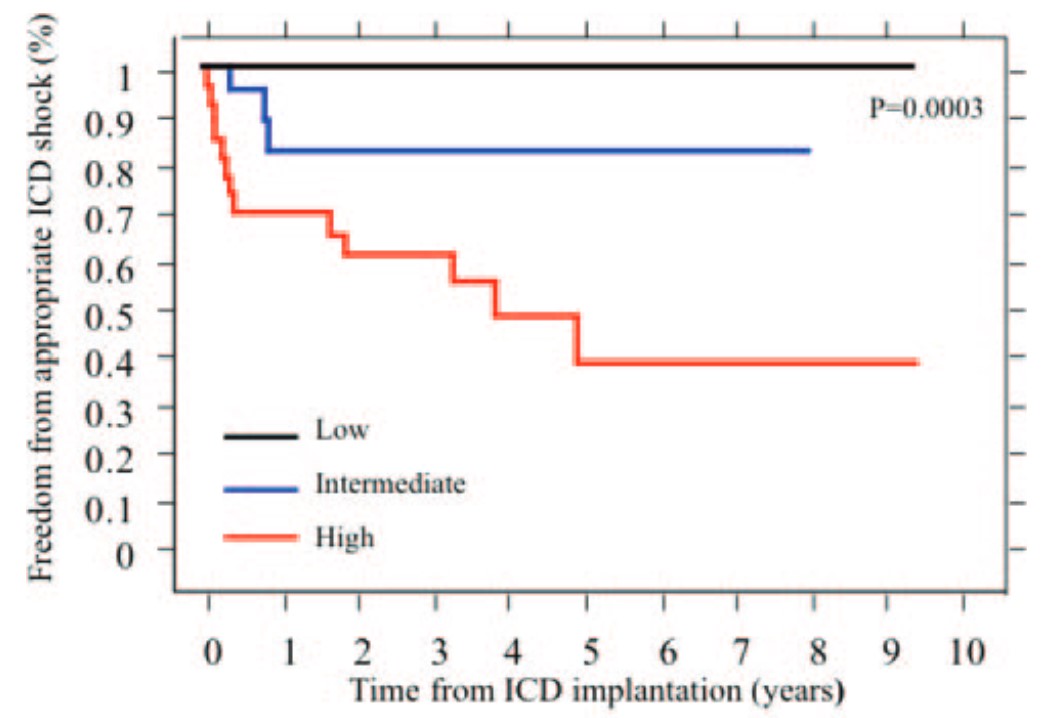
Study curves: freedom from an appropriate ICD shock
The study separates low, intermediate and high-risk groups. The curves compare freedom from an appropriate ICD shock after implantation, with follow-up shown to about ten years. Separation between groups was statistically significant (p = 0.0003). The study defines the group thresholds and scoring.

Bokma model: non-invasive assessment
This model complements the Khairy approach and includes MRI measurements of right and left ventricular ejection fraction. Its composite outcome is all-cause death or ventricular arrhythmia: aborted cardiac arrest, documented ventricular fibrillation, or ventricular tachycardia lasting at least 30 seconds or recurring with symptoms.
The authors reported a C statistic of 0.75 and cautioned that the model may not be accurate enough to select patients directly for a primary-prevention ICD. Its possible use to select patients for invasive investigation needed further study.
| Criterion | Finding |
|---|---|
| Prior palliative shunt | Present or absent |
| QRS duration | ≥180 ms |
| Ventriculotomy incision | Present or absent |
| Sustained VT or non-sustained VT requiring intervention | Present or absent |
| LVEF | <45% |
| RVEF | <30% |
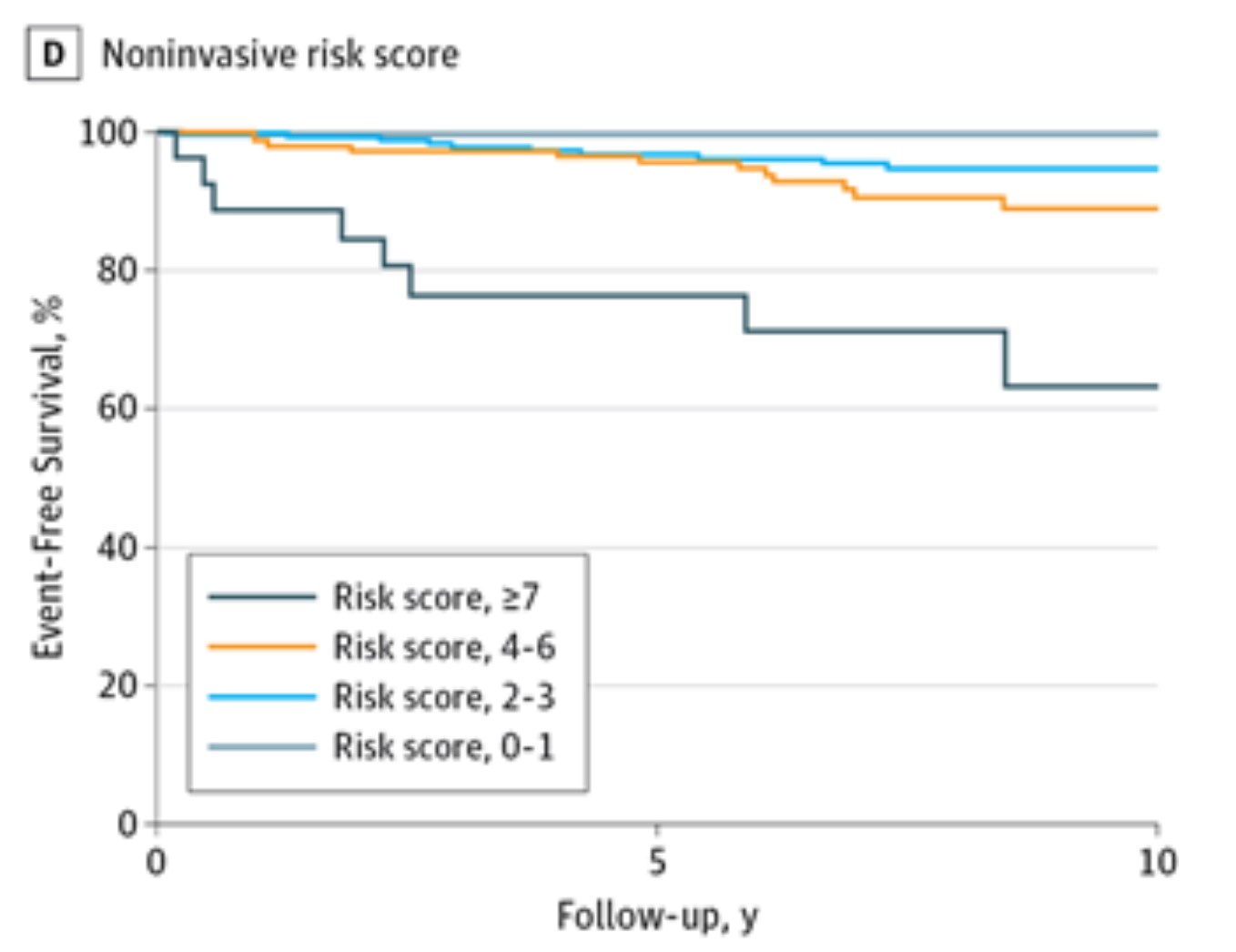
Study curves: event-free survival
The non-invasive model’s curves compare ten-year event-free survival for totals of 0–1, 2–3, 4–6 and at least 7 points. Event-free survival is lower in higher-score groups, with the largest fall in the group scoring at least 7. These are cohort results rather than an individual prediction.

Brompton model criteria
The Brompton model combines late gadolinium enhancement (LGE), ventricular function, exercise capacity, BNP, sustained atrial tachyarrhythmia and age. The study defines how these are combined and interpreted.
| Measurement | Categories |
|---|---|
| RV LGE score | ≤4; 5–7; ≥8 |
| LV LGE | Present or absent |
| RVEF | ≥48%; 36–47%; ≤35% |
| LVEF | ≥56%; 36–55%; ≤35% |
| Peak oxygen uptake (VO₂) | ≥18 or ≤17 mL/kg/m² |
| BNP | ≤126 or ≥127 ng/L |
| Sustained atrial tachyarrhythmia | Present or absent |
| Age | Over 50 years |
Other factors when risk is uncertain
Additional factors to consider with the Khairy and Bokma models include:
Sustained atrial arrhythmia.
Reduced RVEF or LVEF, particularly when not otherwise included in the model.
Fragmented QRS.
Peak VO₂ and the VE/VCO₂ slope.
Raised BNP.
Extensive late enhancement on cardiac MRI.