Trans-oesophageal echocardiogram
A TOE uses an ultrasound probe in your food pipe to take clear pictures of parts of your heart.
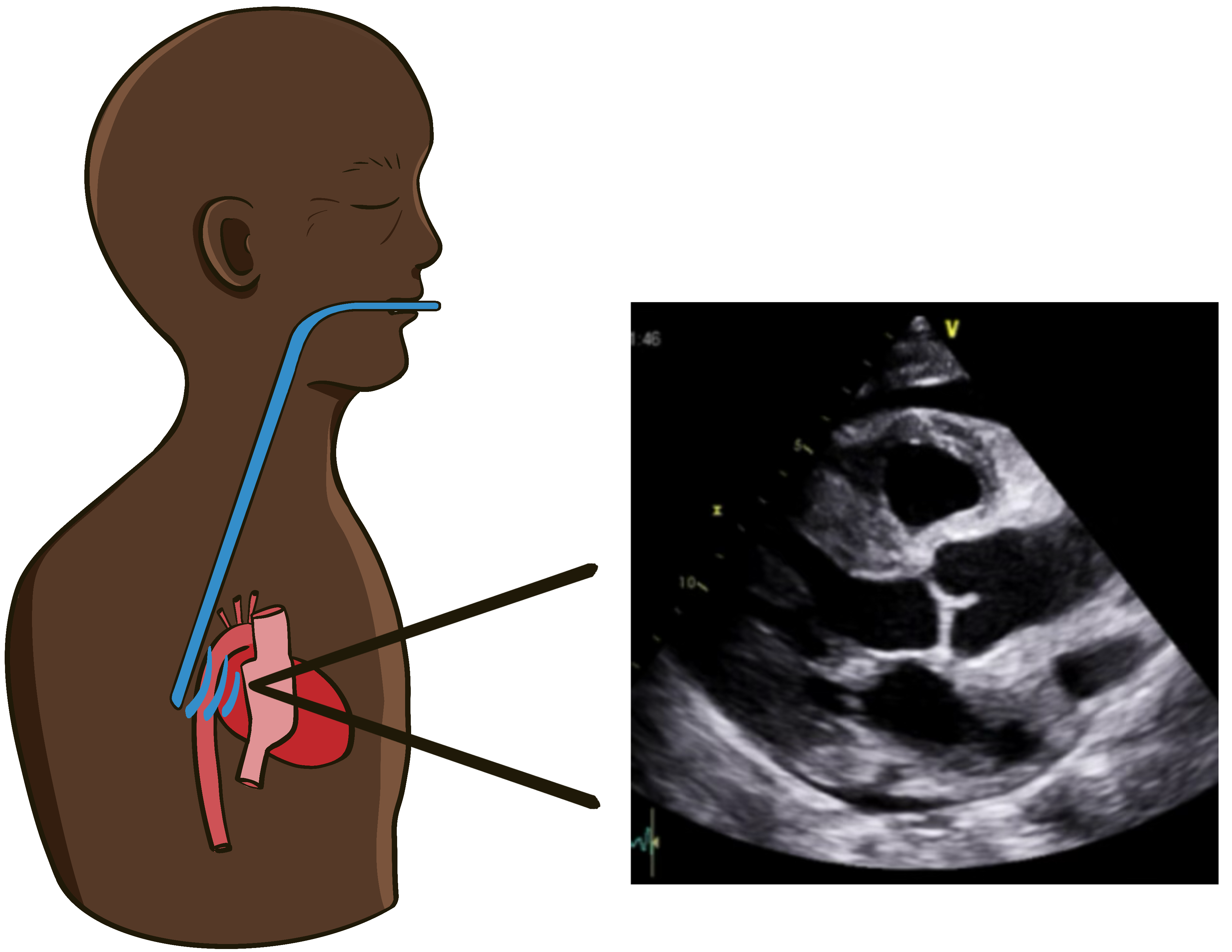

Why might I need a TOE?
A trans-oesophageal echocardiogram (TOE) gives clearer views of parts of the heart that may be difficult to see on a standard transthoracic echo. It is particularly useful for the upper chambers and valves. Common reasons include an atrial septal defect, a leaking valve or endocarditis (infection in the heart).
Where is it done, and who performs it?
It is usually done in hospital by a cardiologist trained in the procedure. It may be available locally, but a rare or complex situation may require travel to Auckland.
What if I have swallowing, stomach or oesophagus problems?
Tell the team about previous stomach or oesophagus surgery, difficulty swallowing, or any other problems with your stomach or oesophagus. These can sometimes make TOE unsuitable.
How should I prepare?
Will I need to stop anticoagulant medicines?
Tell the team if you take an anticoagulant (a medicine that reduces blood clotting). You may sometimes need to stop it before the procedure; follow the team’s instructions.
When should I stop eating and drinking?
You will usually need to avoid food and drink for a few hours. Your appointment information gives the exact timing.
Will I need sedation or a general anaesthetic?
A general anaesthetic is not usually needed. Sedation, commonly fentanyl and midazolam, is given through a line in your arm. It makes you drowsy and relaxed and usually means you do not remember the procedure. An anaesthetic spray numbs your tongue and throat; it may taste bitter.
What happens during the TOE?
You lie on your left side, with a mouthguard to protect your teeth. You swallow a long, thin ultrasound probe into your oesophagus, the tube that carries food to your stomach. Probes are sterilised between scans. The probe connects to the ultrasound machine and takes pictures from inside the oesophagus and stomach. The doctor makes small movements to obtain different views, then removes it. The probe is usually about 10–16 mm wide, no thicker than many foods you swallow.
How long will I be in hospital?
The scan usually takes 20–30 minutes. Expect at least two hours in hospital overall.
Can I drive afterwards?
Plan your journey home. Sedation means you cannot drive for the rest of the day. Arrange another driver, a taxi or public transport.
What are the risks and after-effects?
Major complications are uncommon. A sore throat for a couple of days is the most common after-effect. Rare complications include bleeding or injury to the mouth, oesophagus or stomach, breathing problems, heart rhythm changes and infection. The cardiologist explains your risks before you consent.