Low-dose aspirin
Low-dose aspirin reduces the clumping of platelets, helping prevent harmful blood clots.
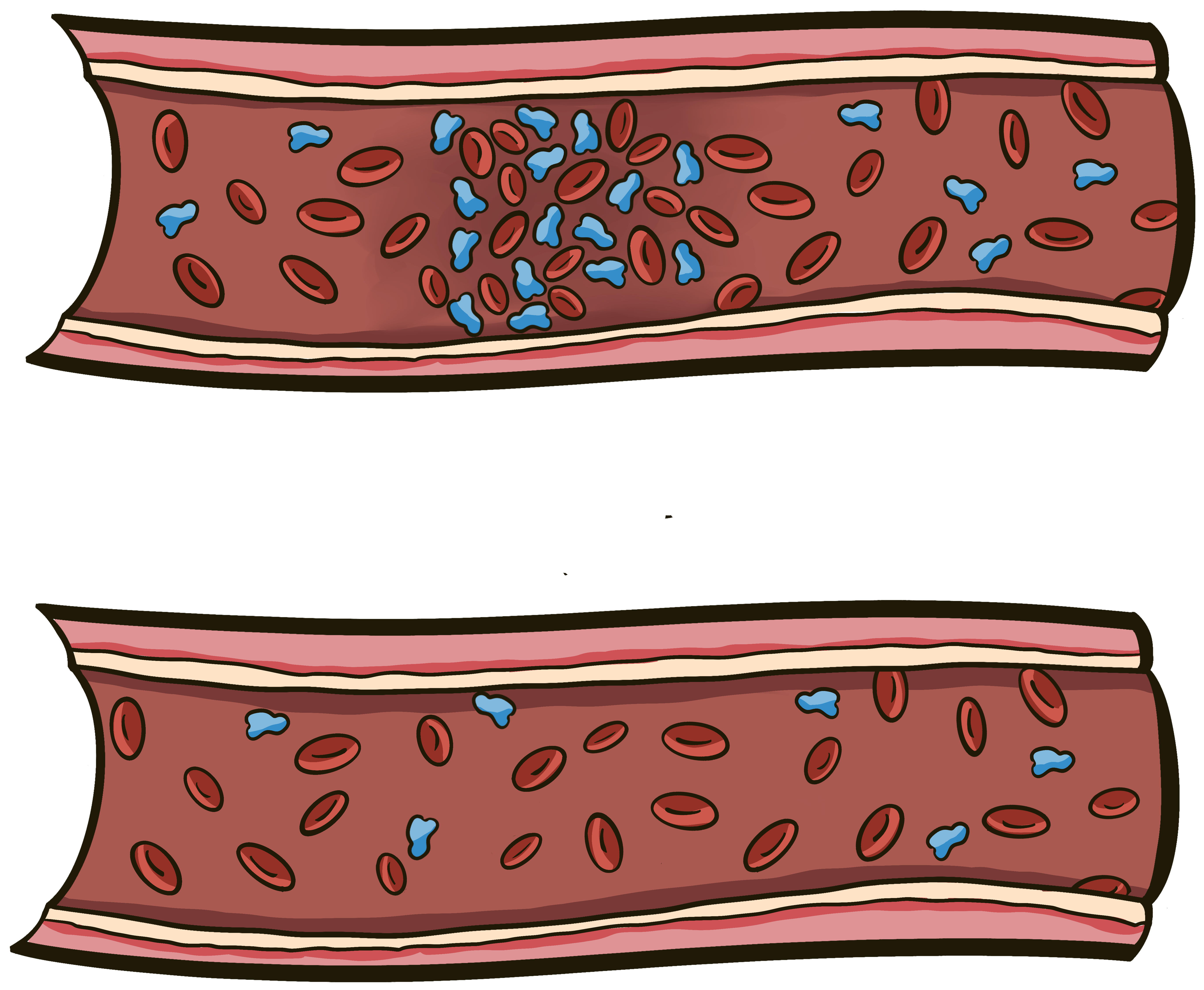

Aspirin reduces the ability of platelets to stick together and form a clot.
What it is used for
Clotting helps stop bleeding after an injury, but clots forming inside the heart or blood vessels can be dangerous. Low-dose aspirin gently reduces clotting when that risk is increased.
In congenital heart care, it can reduce clot risk in a Fontan circulation, on stents, on ASD closure devices and in shunts.
Bleeding and stomach problems
Even at a low dose, aspirin can cause bleeding, particularly from stomach irritation or ulcers.
When should I get help for bleeding?
Blood in vomit or stools can be a sign of serious stomach bleeding. See your doctor urgently if this happens, or if you have other bleeding or bruising that worries you.
Other medicines and supplements
Some medicines interact with aspirin. Over-the-counter anti-inflammatory medicines and some herbal products can increase the risk of bleeding. Tell your doctor and pharmacist about everything you take, and check with your medical team or pharmacist before starting another medicine or supplement.
If you are unsure, talk to your cardiology team, GP or pharmacist.
How low-dose aspirin works
Platelets are small blood cells that clump together to help form a clot. Low-dose aspirin reduces this clumping, particularly reducing clot formation inside arteries.
The role of thromboxane A₂
At a low dose, aspirin blocks production of thromboxane A₂, a substance involved in platelets clumping together. This is how it reduces clot formation.