Holter monitoring
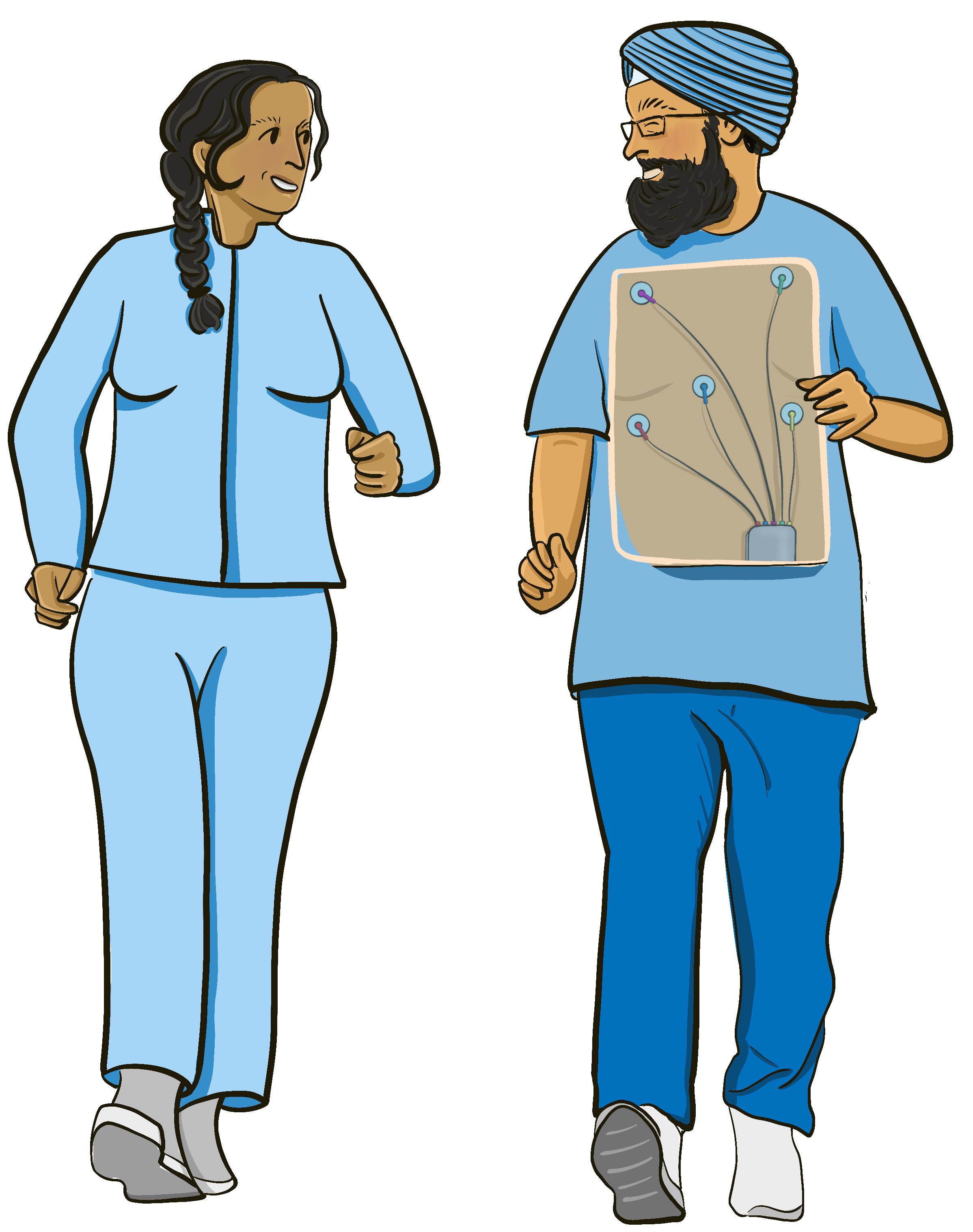
A Holter monitor records the electrical activity of your heart during everyday life.

What does a Holter monitor record?
A Holter monitor records your ECG for 24–48 hours, or occasionally longer. An ECG shows the heart’s electrical activity and whether the rhythm is normal (called sinus rhythm), too fast or too slow.
Why is an ECG in clinic not enough?
The ECG in clinic records only a few seconds. A Holter can pick up short episodes that happen at other times.
Why might I need monitoring?
It may be requested for palpitations (a rapid or irregular heartbeat), major dizzy spells or blackouts. Your team may also arrange routine monitoring without symptoms if your condition carries a higher risk of abnormal rhythms.
How is the monitor fitted and removed?
Sticky electrodes on your chest connect through wires to a small recorder worn at your waistband or around your neck. It records your ECG onto a small hard drive. You attend the clinic to have it fitted and return at the end of the monitoring period to have it removed.
Do I have to stay in hospital?
You do not need to stay in hospital. Go home, to work or to school as usual. Try to have as normal a day as possible so the recording represents your usual activities.
What if sticky electrodes irritate my skin?
Monitoring can be a nuisance, and the sticky electrodes may cause a minor skin reaction, but there are few other downsides.
Tell the cardiac physiology team if ECG sticky electrodes have irritated your skin before. They may be able to use a different type.
What should I write in the monitoring diary?
Fill in the diary supplied when the monitor is fitted. Record your activities and any symptoms, such as a fast rhythm or dizziness. The team can then check whether a rhythm change happened at the same time.