Exercise testing
An exercise test helps your team understand how your heart works during activity.
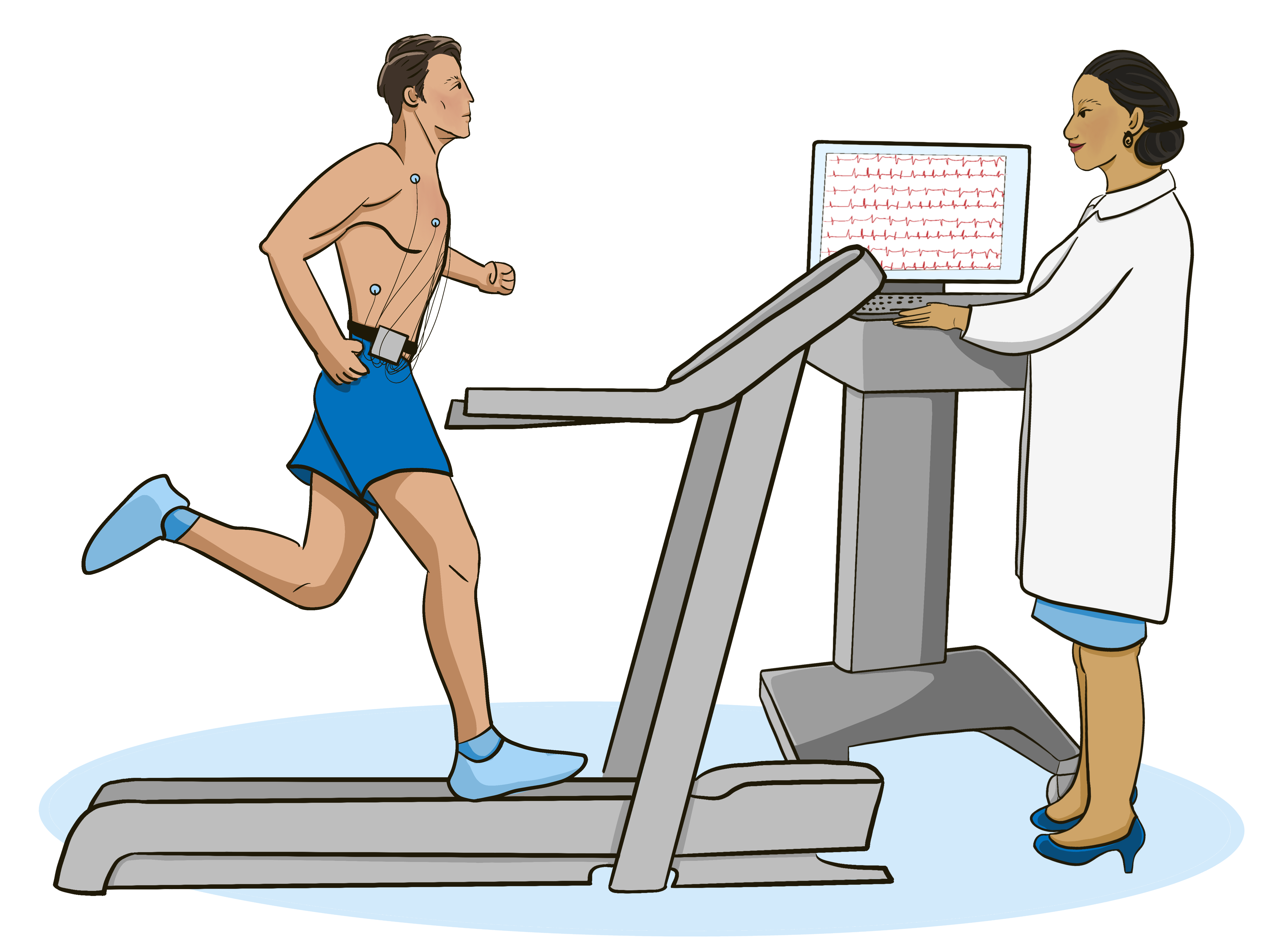

Why might I need an exercise test?
An exercise test shows how efficiently your heart delivers blood to your muscles. Most people have one every few years to monitor heart health. It may help your team decide when surgery or another procedure is needed. Less often, it checks for possible coronary artery disease or abnormal rhythms during exercise.
How should I prepare?
Wear comfortable clothes and shoes suitable for walking or running.
Avoid arriving with a full stomach.
Your medical team will tell you if any medicines need to be stopped before the test.
Where is the test done, and who supervises it?
The test is done at the hospital, supervised by a physiologist and a doctor.
Which type of exercise test will I have?
Standard treadmill test
There are two main types: A standard exercise test records your ECG while you walk or run on a treadmill. It starts slowly and flat, then gets faster and steeper every three minutes.
Cardio-pulmonary exercise test (CPET)
A cardio-pulmonary exercise test (CPET) also measures oxygen and carbon dioxide in the air you breathe through a mask. It uses a treadmill or stationary exercise bike. Measuring how much oxygen your muscles extract helps show how much blood the heart delivers to them. CPET is usually preferred because it gives extra information, but it is not available everywhere.
What if I cannot exercise for very long?
This assesses your heart, rather than testing how fit you are. It still gives useful information if you cannot exercise for long.
Try to continue as long as you comfortably can, but you can stop whenever you cannot go further or feel unwell. You will not be made to exercise beyond what feels comfortable.
What are the risks, and when is the test stopped?
Major complications are very uncommon; the risk is similar to exercising generally. Your ECG is monitored carefully. The team stops the test if there are concerning changes or symptoms such as chest pain, major breathlessness or light-headedness.