Cardiac MRI
MRI uses a magnetic field and radio waves to take pictures of the heart without X-rays.
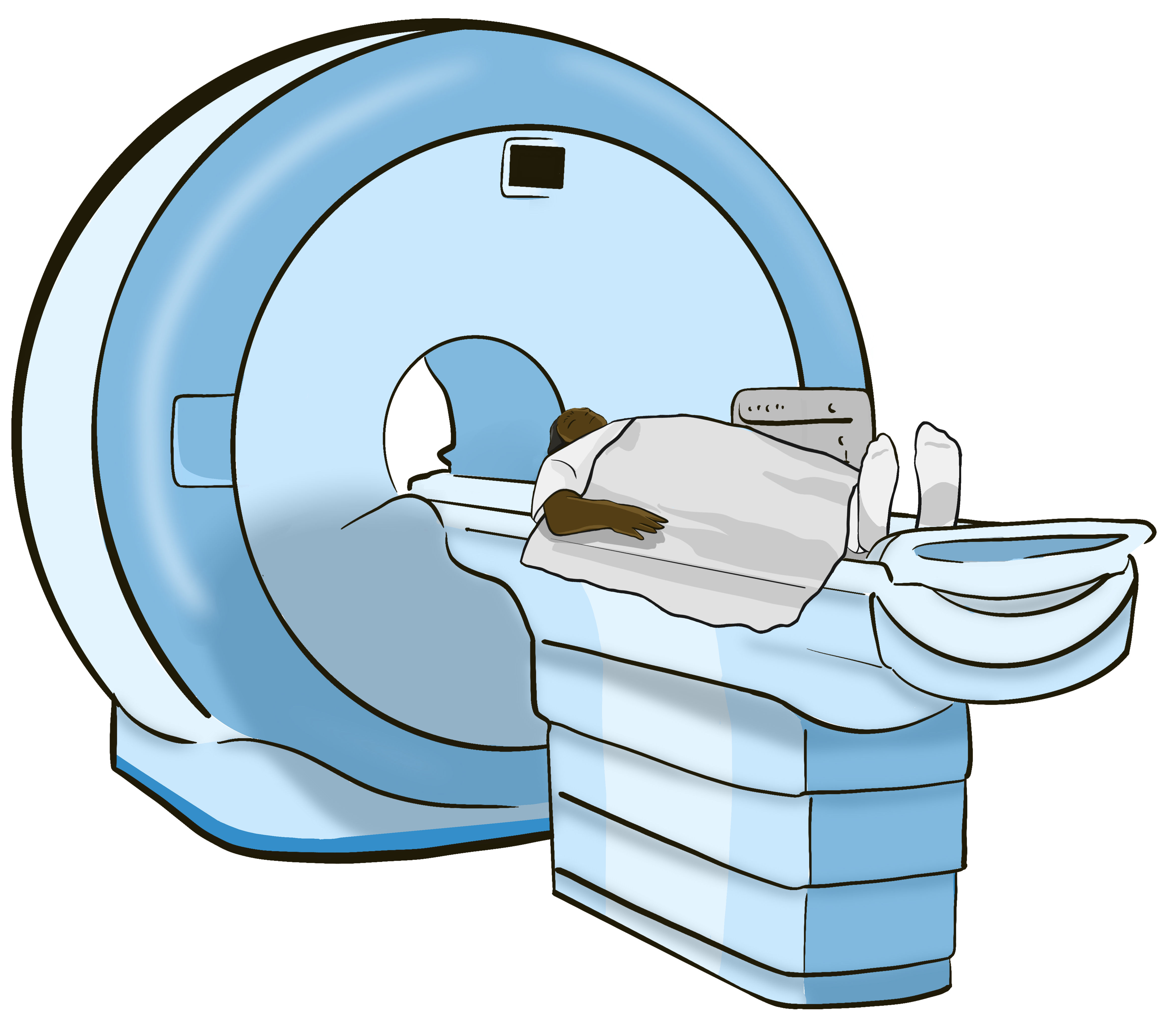

MRI stands for magnetic resonance imaging. Cardiac MRI is often used to get detailed pictures of congenital heart conditions.
Before your scan
Follow the fasting instructions in your appointment letter. You will usually be asked not to eat for a specified time before the scan.
Avoid caffeine for 24 hours before the scan, including coffee, tea and chocolate.
Pregnancy, pacemakers and other considerations
Tell the team about metal implants, injuries involving metal fragments (especially around the eyes), a pacemaker, kidney problems or a previous reaction to MRI contrast.
Can I have an MRI if I am pregnant?
MRI can be used during pregnancy, but gadolinium contrast is usually avoided. Tell the team if you are pregnant.
What if I have a pacemaker?
Some newer pacemakers are designed for MRI, while others are unsuitable. Your cardiologist needs to check your particular pacemaker.
What about metal implants or metal-fragment injuries?
MRI is usually safe, but the powerful magnet can make it unsuitable with some metal implants or metal-fragment injuries.
What if I have kidney problems?
Gadolinium is not advised in some situations, particularly major kidney dysfunction.
You may be asked to have a blood test to check kidney function before receiving gadolinium contrast.
What if I have reacted to MRI contrast before?
A previous contrast reaction also increases the risk of another reaction, so tell the team before the scan.
Allergic reactions are uncommon. They can include itching, flushing, a rash or hives. Severe reactions, including breathing difficulties or anaphylaxis, are very rare. The MRI facility has medicines and resuscitation equipment to treat a reaction. If you have reacted before, medicines given before a scan may sometimes reduce the chance of another reaction. Discuss this with the team in advance.
Where will my MRI be done?
In New Zealand, these scans are mainly done in Auckland, Christchurch and Wellington, although more straightforward scans may be available elsewhere. You may need to travel: cardiac MRI requires special scanner software and a radiologist or cardiologist trained to interpret heart scans.
What happens in the MRI scanner?
The circular part of the scanner is a powerful magnet. MRI uses magnetic fields and radio waves rather than X-rays, avoiding the X-ray radiation used in CT. You lie on a bed that moves into the scanner while the pictures are taken.
How long does it take, and what does it feel like?
Most scans take 30–60 minutes. A more complicated heart diagnosis or a need for more information can mean a scan lasts over an hour. It can feel boring, but try to stay still so the pictures are clear.
Is the scan painful or noisy?
The scan itself is not painful. The scanner is noisy, so you wear headphones; you may be able to listen to music for part of the scan.
Receiving contrast involves the small needle used to put the intravenous line into a vein.
What if I feel claustrophobic?
The space is small and can feel claustrophobic.
If small, enclosed spaces are difficult for you, discuss this in advance. Sedation may be possible but usually needs arranging before the appointment.
Will I need gadolinium contrast?
Sometimes a clear contrast liquid containing gadolinium is injected through a small intravenous line in a vein, often placed before the scan. It appears bright on MRI pictures, making blood vessels and areas of abnormal heart muscle easier to see.
Gadolinium can improve some MRI pictures. Your team considers whether contrast is appropriate for the information needed and your health.
As far as we know, gadolinium is safe and has been given to many millions of people worldwide.
Gadolinium safety and retention
A very small amount remains in the brain long after a scan, but there is no evidence that this causes problems.