Transposition after Mustard or Senning repair
Transposition of the great arteries, or TGA, causes low oxygen levels in newborn babies. Mustard and Senning operations are repairs that redirect blood through the upper chambers.
Also known as: TGA, transposition of the great arteries, Mustard operation, Senning operation, atrial switch
Normal heart
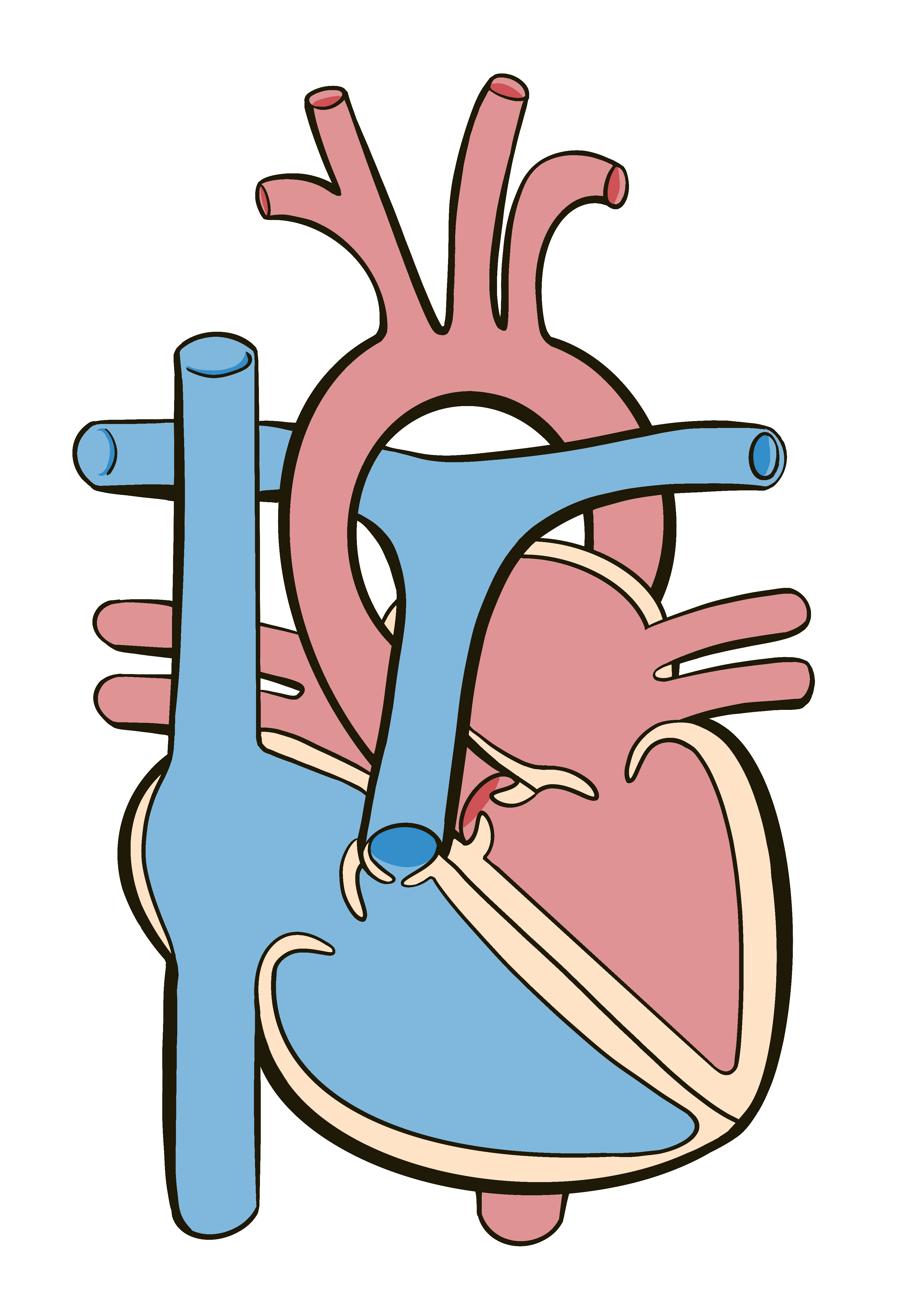

Before repair
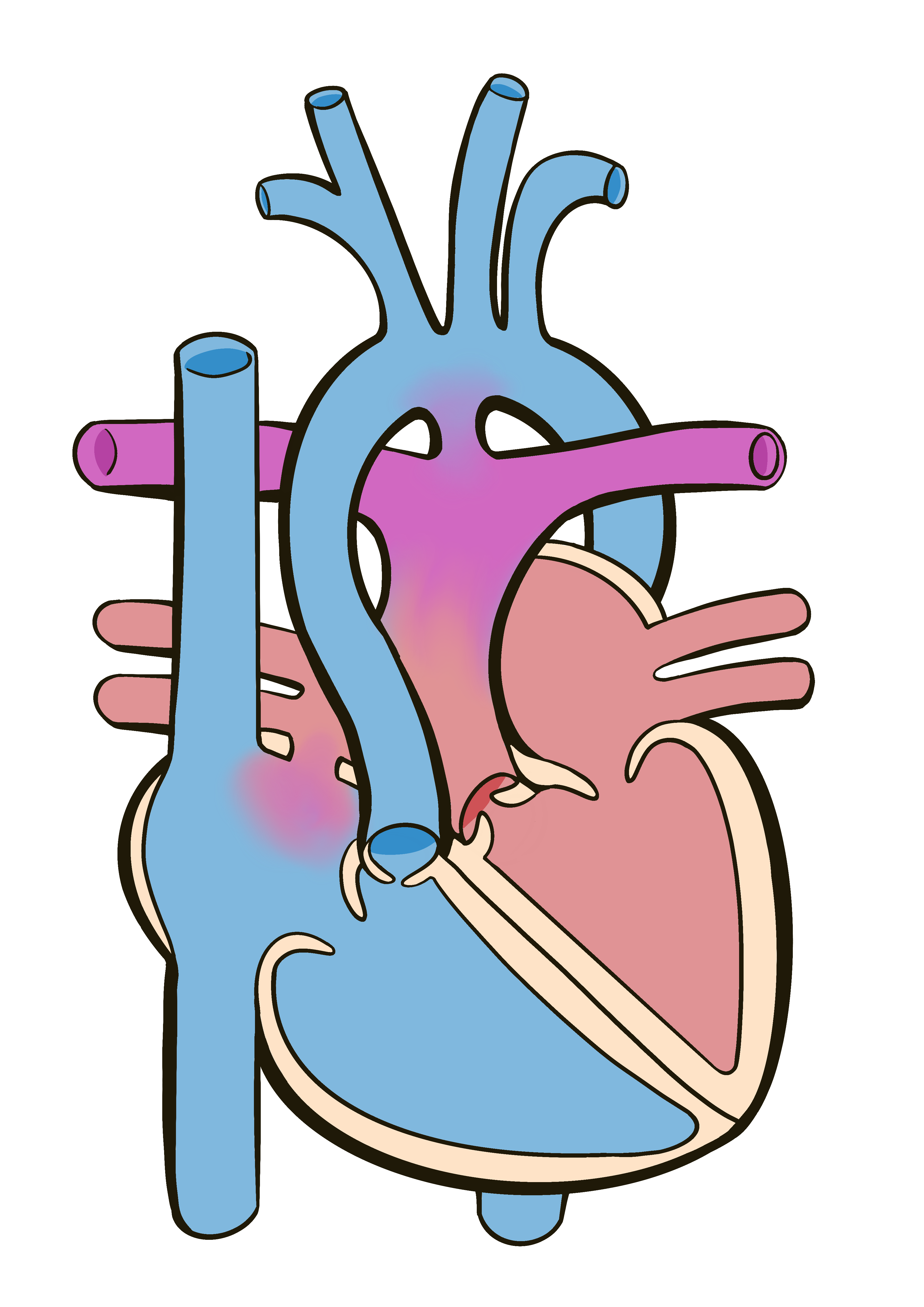

Transposition after Mustard or Senning repair
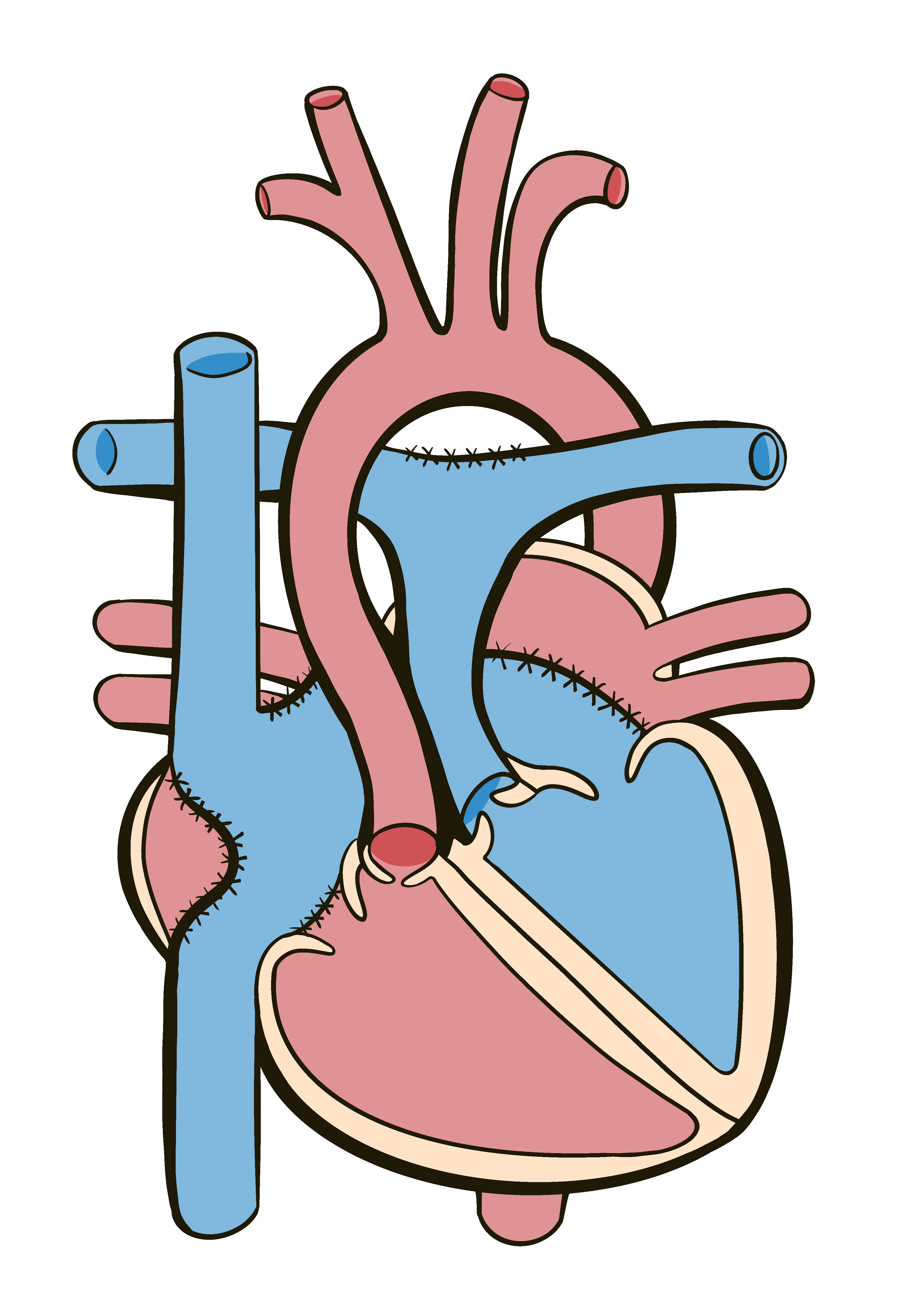

What this means in adulthood
Transposition of the great arteries is the most common cause of low oxygen levels in newborn babies, sometimes described as a “blue baby”. Mustard and Senning operations redirect blood through the upper heart chambers. They are life-saving repairs, but the heart remains different from normal and needs lifelong cardiology follow-up.
Background and history
The operations were developed by Dr William (Bill) Mustard in Canada and Dr Åke Senning in Sweden. More than 400 people in New Zealand have had one of these operations.
What your team monitors
A weaker right ventricle
Right ventricular dysfunction means the right ventricle becomes weak. After a Mustard or Senning repair, this chamber pumps blood around the body. If it weakens, it may not deliver enough blood.
What symptoms should I tell my team about?
You may tire or become breathless more easily and retain extra fluid.
Tell your cardiology team about new symptoms, which may mean the ventricle is getting weaker.
What treatment can help a weak right ventricle?
Some medicines may slow deterioration; others help remove excess fluid. There is no operation that repairs the weakened right ventricle. Some people with severe weakness have needed a heart transplant.
What can I do to reduce extra strain?
Stay active, avoid becoming overweight, do not smoke and avoid excess alcohol to limit additional strain.
Why the right ventricle can weaken
The right ventricle normally pumps to the lungs. Pumping to the whole body after an atrial switch requires much more work than it was designed for, and it can weaken over time.
Fast rhythms in the upper chambers
Atrial flutter is a fast abnormal rhythm starting in the atria, the upper heart chambers. It may not cause immediate problems, but a prolonged fast rate can weaken the heart. Clots can also form in the atria and travel to the brain, causing a stroke.
What if my rhythm changes?
Get checked straight away if you notice a rhythm change: your team usually aims to restore normal rhythm promptly.
How is atrial flutter treated?
Medicines or cardioversion can restore normal rhythm. Cardioversion is an electrical shock, given under a brief general anaesthetic. To reduce recurrence, your team may recommend rhythm medicines or catheter ablation, a specialised catheter procedure that treats the area causing the rhythm.
Can I prevent these rhythms?
You cannot usually prevent it, although excess alcohol or caffeine can trigger rhythms for some people.
How surgical scars can affect the rhythm
The surgeon’s stitching leaves scars in the atria. These can create electrical short circuits that cause the rhythm.
Slow heart rhythms
Sinus node dysfunction means the part of the heart that starts each beat is not working normally. The heartbeat can be slow and may not speed up enough during activity. You may be less able to exercise, or have dizziness or blackouts.
What symptoms should I tell my team about?
Tell your doctor or cardiology team if you are slowing down, becoming dizzy or having blackouts.
When can a pacemaker help?
If the slow rhythm causes problems, a pacemaker may help. This small device sits under the skin of the upper chest and connects to the heart through a large vein. It detects a slow heartbeat and sends a small electrical signal to make it beat faster.
Can I prevent a slow rhythm?
It is related to the original operation, so there is usually nothing you can do to prevent it.
Why the heartbeat can slow
The sinus node is close to the cuts made during the original surgery and can be affected by scarring.
Why follow-up matters
Lifelong follow-up monitors the right ventricle and heart rhythm. Staying active, maintaining a healthy weight, avoiding smoking and avoiding excess alcohol help prevent extra strain on the heart.
Resources and references
- this link (external resource)
- Detailed information from the ACHA (external resource)
- Webinar from Dr Gary Webb (external resource)
- Q+A information sheet from Canada (external resource)
- Information from Leeds, UK (external resource)
- American Heart Association: cardioversion (external resource)
- American Heart Association: catheter ablation (external resource)